Recycling Waste Aluminum: Synthesis of Potassium Alum
Background Information
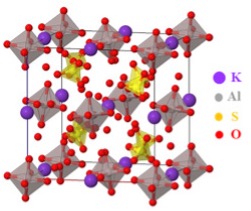
Potassium Alum, \(\ce{KAl(SO4)2*12H2O}\), is a naturally occurring chemical that has been used by civilizations dating as far back as Ancient Egypt (~ 3000 BCE). First used as a water treatment chemical to reduce sediments in water and make it more clear, potassium alum is also useful in leather tanning to prevent hides from rotting, as leavening agent in cooking, and as fire retardant. Potassium alum is safe enough to be used as a cosmetic, helping to reduce bleeding in minor cuts. Alum crystals are even used as natural alternatives to deodorants!
Potassium alum can also be chemically synthesized from aluminum metal (used in daily life as tinfoil or beverage cans!) by first reacting the metal with potassium hydroxide, \(\ce{KOH}\). This provides the potassium ions needed in alum and forms potassium aluminate, \(\ce{KAl(OH)4}\), which is soluble in water. In a second step, sulphuric acid is added, which will form the potassium alum, \(\ce{KAl(SO4)2*12H2O}\), by providing the sulfate ions needed. Alum is not very soluble in water at room temperature, therefore we can filter the final solution to obtain our crude solid (not pure).